Let’s be clear about one thing: The algorithm that runs the airline industry is written in a dead language by a sadistic AI. It optimizes for misery and calls it efficiency. It calculates the exact amount of legroom required to induce deep vein thrombosis without technically breaking the Geneva Convention, and then subtracts an inch just to see if you’ll cry.
The flight out of Atlanta was a study in entropy. We didn’t leave; we escaped. The cabin air tasted like it had been recycled since the Carter administration—stale coffee, anxiety, and that specific, plastic smell of overheated avionics and despair. I sat wedged between a man reading a manifesto on his iPad and a window that rattled like a loose tooth. The pilot sounded like a deepfake trained on reassuring lies, his voice too smooth, too calm for the turbulence that was trying to shake the rivets out of the wings. By the time the landing gear screamed against the tarmac in San Francisco, the sun was a rumor and the sky was a bruised purple bruise—the color of a CRT monitor left on too long, burning its ghost image into the retina of the bay.
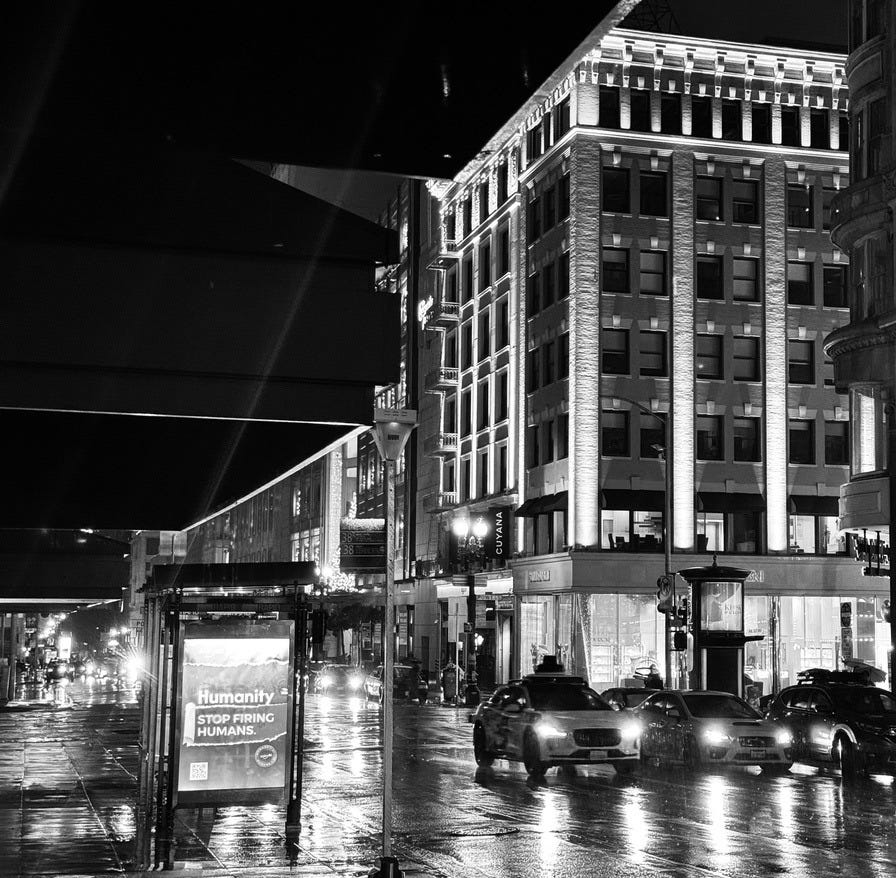
It was dark. It was raining. Not the romantic drizzle of a rom-com, but a heavy, industrial soak that gets into your marrow and stays there, paying rent with aches.. It was the kind of rain that washes away the marketing veneer and leaves only the raw, shivering infrastructure underneath. You could hear the city gurgling, the storm drains choking on the runoff of a million tech dreams.
The itinerary was supposed to be structured, a linear progression of leisure, a meticulously curated spreadsheet of “fun.” But the moment our boots hit the wet pavement, the plan dissolved. We landed in that dark wet—the kind of damp that bypasses Gore-Tex and attacks the soul directly—and immediately realized we required chemical stabilization, a hard recalibration of the internal gyroscope.
So we ventured into the labyrinth of downtown to find a dispensary, because in 2026, weed is easier to find than a parking spot. We navigated streets that felt like canyon floors, the skyscrapers disappearing into the low clouds. The dispensary itself looked less like a head shop and more like an Apple Store for people who want to forget their passwords—everything white, backlit, sterile. iPads mounted on floating tables displayed terpene profiles like stock tickers. The product was sold by a budtender who looked like they coded Python in their sleep and judged my lack of crypto-wallet. I bought something called “Neural Reset” because it seemed appropriate for the glitch we were living in.
From there, the night spiraled into a wet blur. We got lost in the rain, hunting for cheap champagne like rats in a maze, soaking our shoes in the runoff of a thousand tech startups. We splashed through puddles that reflected the shattered logos of banks and crypto-exchanges, searching for bubbles in a city of burst ones. Every liquor store was a fortress of plexiglass and indifference. We finally abandoned all pretense of a “New Year’s Eve.” We retreated to the bunker of our hotel room, shaking off the water like wet dogs. We ordered Chinese food that tasted like salvation and MSG—General Tso waging a war on our sobriety—and passed out before the ball dropped.
But Daniela just laughed. She was wrapped in a hotel bathrobe that cost more than the meal, holding a carton of lo mein like it was a royal scepter. She turned the cheap takeout into a banquet, declaring the rain “atmospheric mood lighting.” She made the chaos feel like a private joke we were both in on, a secret frequency only we could hear. Fuck New Year’s. The future arrives whether you toast it or not, but it arrives better when she’s there to roll her eyes at it.
The Day of the Dragon
The next morning, the city was still weeping. An atmospheric river, they called it. I called it a rendering error in the skybox, a texture file that refused to load properly. We countered the gloom with mimosas and a hotel breakfast that cost more than my first car—eggs benedict served with a side of economic disparity—and then stood in Union Square watching the NPCs.
There is a specific kind of madness required to ride a roofless double-decker bus in an atmospheric river, yet there they were: tourists in translucent plastic ponchos, getting waterboarded by their own vacation itinerary. They sat grimly, fulfilling their programmed loops while the heavens opened up, clutching wet maps and staring at the blurred facades of Macy’s. Daniela watched them with pure glee, narrating their inner monologues (”I spent four thousand dollars to sit in a mobile bathtub“) until I was laughing so hard I forgot my shoes were still squishing with every step.
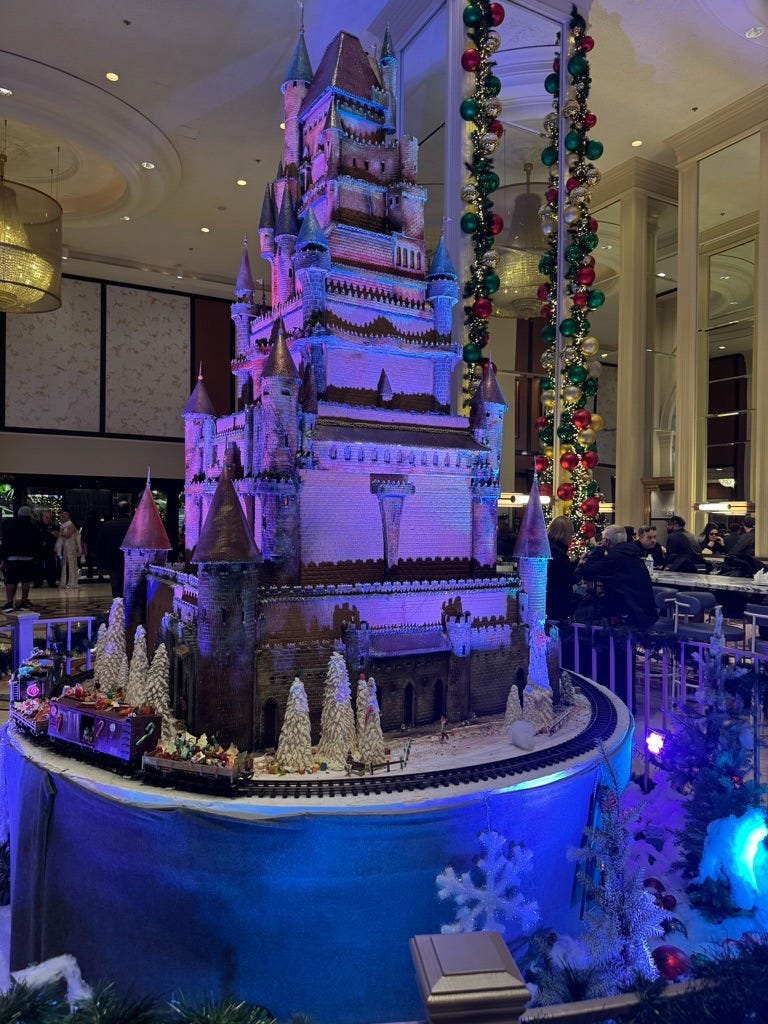
Then, the glitch. We saw a castle made of cookies. A literal fortress of sugar inside a department store window. It made no sense. It was perfect. A structural impossibility held together by icing and hope, defying the grey dampness outside. It was a monolith of gingerbread architecture, complete with spun-sugar drawbridges and gumdrop battlements. Daniela saw it first, of course. She always spots the magic before the logic kicks in, pointing it out with a gasp that cut through the noise of the rain.
We took the cable car—ancient, grinding tech that feels more real than anything in Silicon Valley. You can hear the wood groan as it grips the cable running beneath the street. You can smell the friction of the brakes, hot iron on wet steel—a scent that predates the microchip. It’s a machine that actually works, pulling us up the vertiginous slopes straight into the heart of Chinatown, rattling our bones in a way that felt oddly grounding.
The sensory profile shifted immediately as we crested the hill. The smell of wet concrete was replaced by five-spice, roasting meat, and ozone. We ate duck that fell off the bone, the skin a perfect lacquer of fat and flavor, glistening under the fluorescent lights. We had sesame beef that stuck to the ribs, creating a caloric shield against the cold. We drank hot tea in a place that looked like a set piece from Big Trouble in Little China—dimly lit, loud, and utterly indifferent to our presence. The waiters moved with efficient lethargy, slapping plates down with a rhythm that matched the rain. Daniela poured the tea like a ritual, two hands on the pot, grounding us in the steam and the noise, turning a lunch break into a ceremony.
The mission, however, was specific. We spent the night hunting for a mythical object: A hat that transforms cats into dragons.
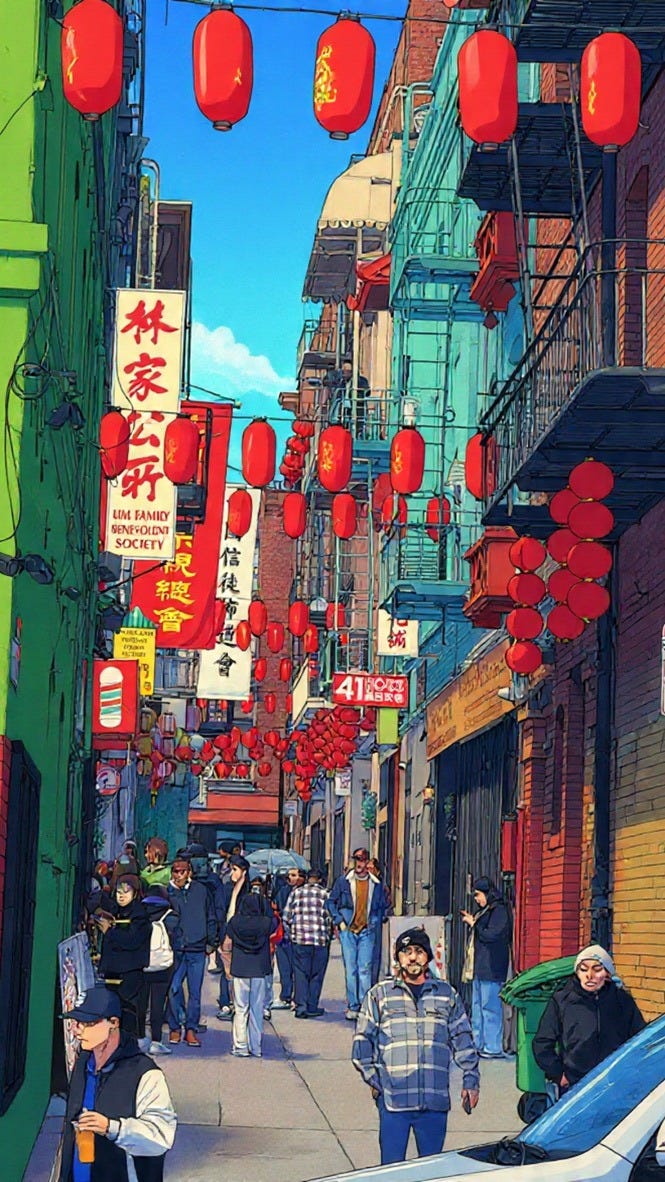
This was not a metaphor. We wanted the physical artifact. A plush, ridiculous transformative helm for a feline. Does it exist? We went from shop to shop, dodging umbrellas and neon reflections in the puddles. The shopkeepers looked at us with a mix of pity and confusion. One guy just pointed at a wall of waving gold cats and shook his head, muttering about tourists. We found hats for dogs. We found capes for lizards. We found a small kimono for a guinea pig. But the dragon hat remained elusive. We didn’t find it. But the search kept us warm while the rain tried to drown the world. Daniela turned every rejection into a new quest marker, pulling me into the next shop with a grin that said we’re going to find this thing even if we have to stitch it ourselves. We were knights errant in a cyberpunk noodle noir, questing for a grail that would make a house cat look like a mythological beast.
Robotaxis and The Art of Discontent
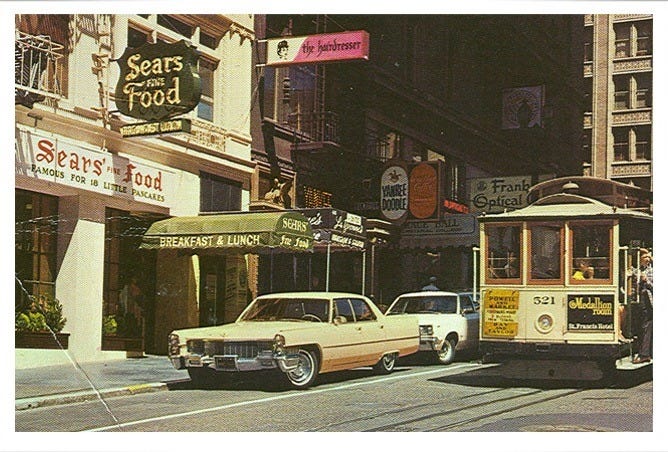
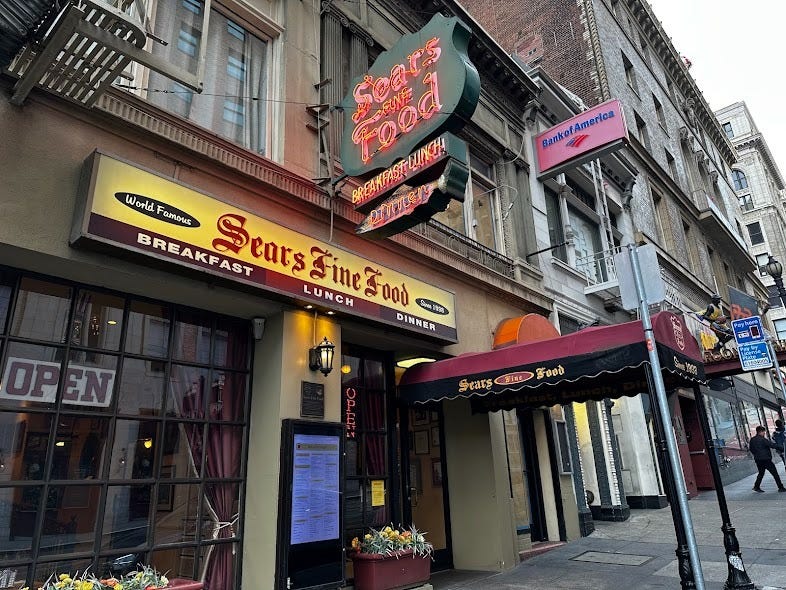
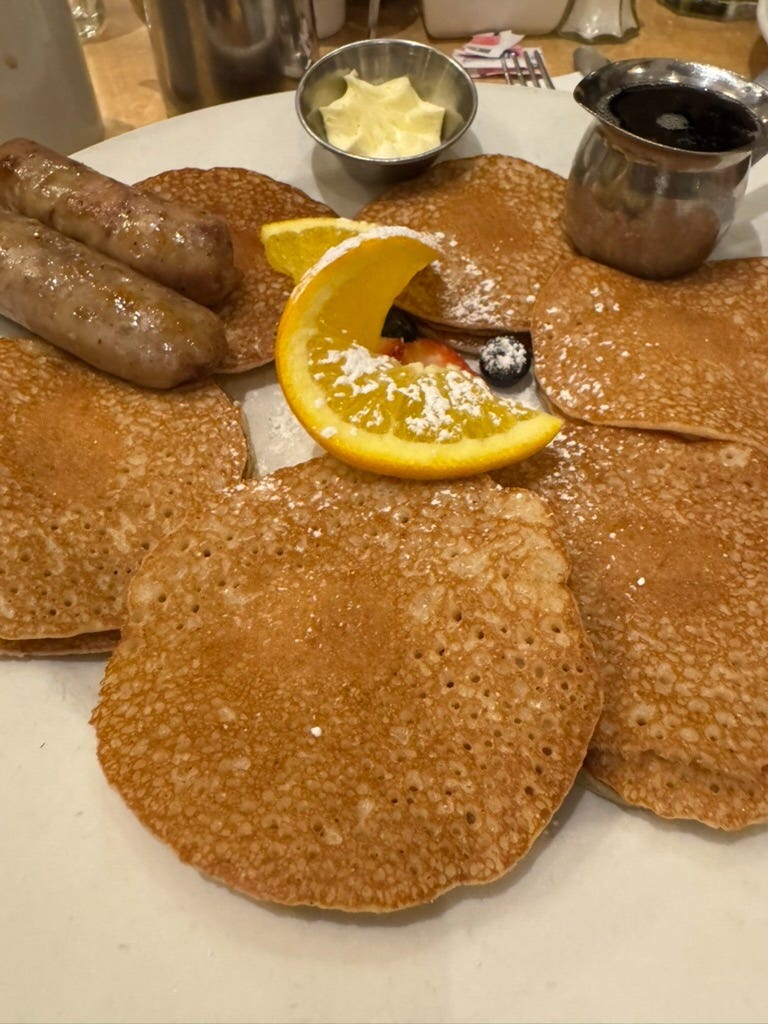
The next morning, we ate Swedish pancakes at Sears Fine Food, a restaurant that functions as a wormhole to 1950. The lingonberries were tart, the butter was plentiful, and the decor hadn’t changed since the Eisenhower administration. For a moment, the timeline felt stable. Daniela declared the pancakes “medically necessary,” prescribing a double dose of syrup, and who am I to argue with a doctor of vibes?
Then, we summoned the ghost cars.
We took a robotaxi to the SFMOMA. Watching the steering wheel turn by itself while the rain lashes the windshield is a distinct type of modern horror. It’s cool, aesthetically—the invisible driver, the clean interface, the silence. But then you remember the code doesn’t care if you live or die, only that it optimizes the route. The car smelled like ozone and someone else’s expensive perfume—the lingering scent of the previous passenger’s anxiety. You are just cargo in a variable equation. The lidar spins, the wipers thrash, and you trust your life to a server farm in Arizona. But Daniela treated the invisible driver like an old friend, rating its turns and critiquing its braking (”A little aggressive on the yellow light, HAL, tone it down“) until the uncanny valley felt like a comedy club.
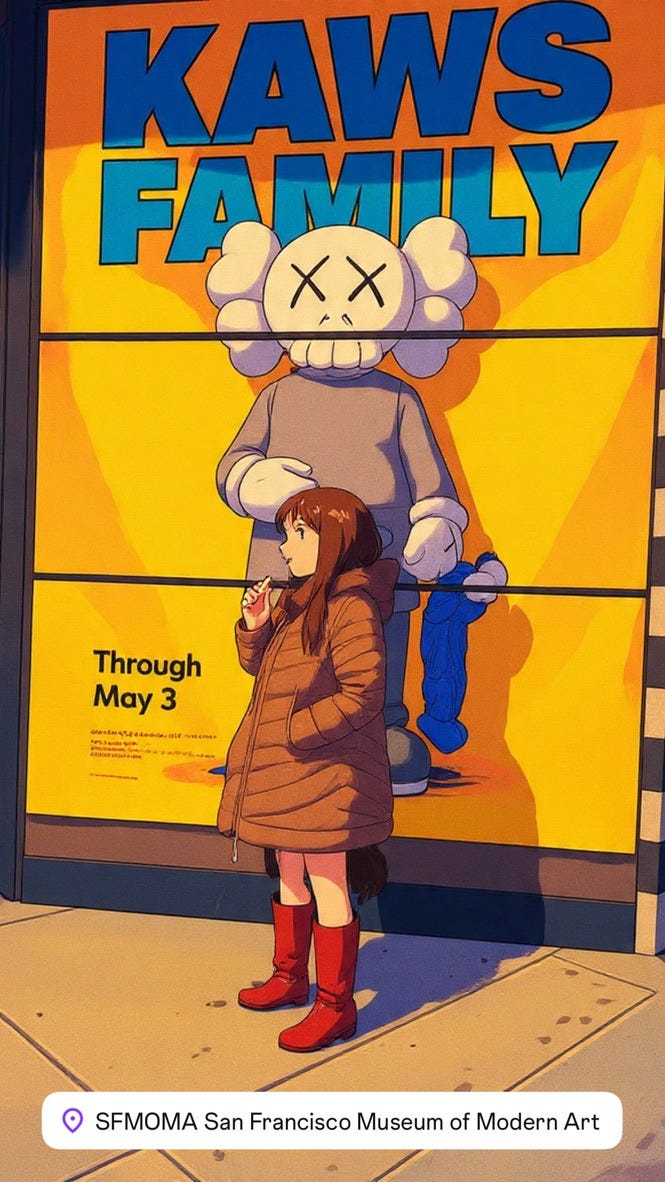
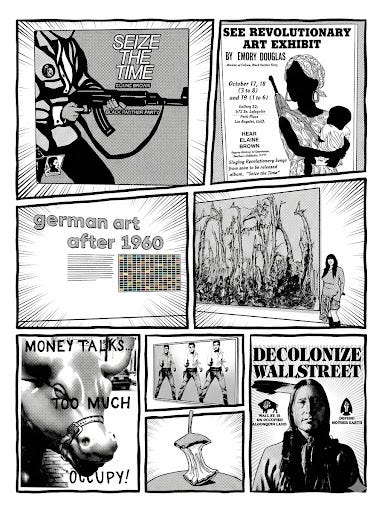
Inside the museum, the air was dry, expensive, and filtered. We saw Warhol’s mass-produced fame, staring back at us with dead, colorful eyes. We saw Matisse’s joyful deconstructions. We saw Frida Kahlo’s raw, bleeding heart on canvas—pain translated into pigment. We stood in front of Gerhard Richter’s blurred realities—images that looked exactly like the city outside the window, smeared and out of focus—and remarked on the universal truth of the gallery: Artists are perpetually dissatisfied with America’s crimes. The art wasn’t just decoration; it was an accusation, hung on pristine white walls. Daniela found the beauty in the dissatisfaction, pointing out the brushstrokes that proved a human hand had been there, fighting the entropy, leaving a mark that the rain couldn’t wash away.
We had coffee with a statue.
We took another ghost car to Ike’s for “Love and Sandwiches,” which sounds like a bad indie band but tastes like victory. The bread was crunchy (Dutch Crunch, the only bread that fights back), the “Dirty Sauce” was a revelation, and for twenty minutes, the world made sense.
Then? All day in the rain. Just endless, relentless hydro-therapy. The city was dissolving, turning into a watercolor painting left out in a storm.
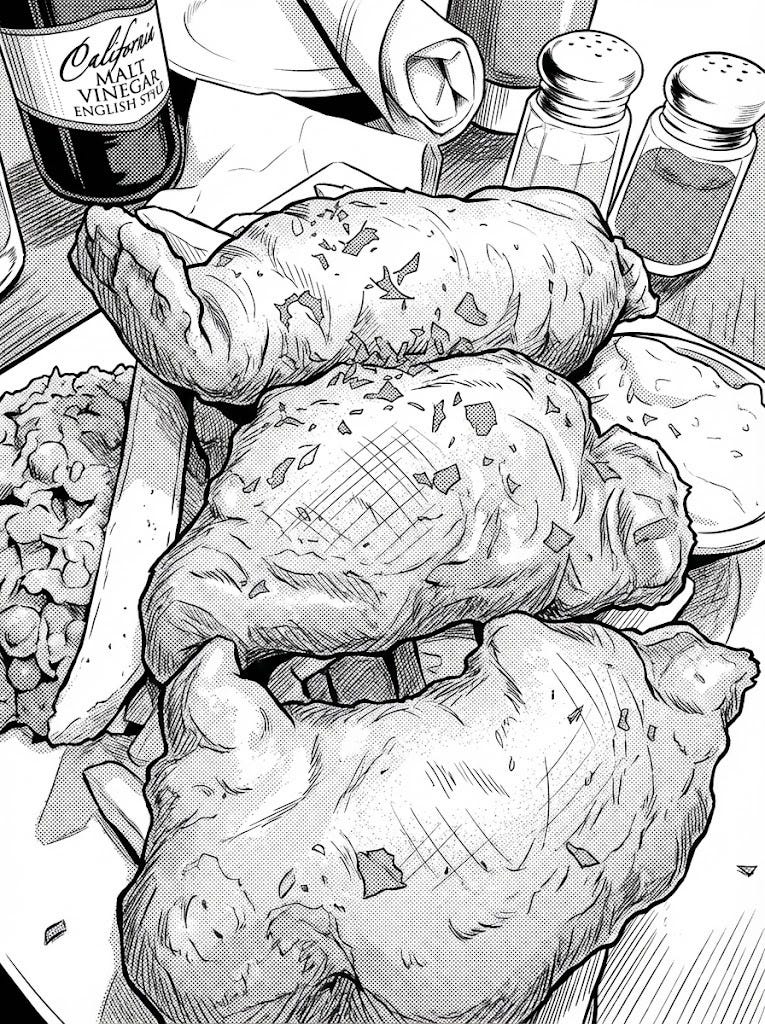
Dinner was fish and chips with peas at Johnny Foley’s. Fried food is the only valid defense against a monsoon. The batter was crispy, a golden armor against the damp. The beer was cold. The peas were that shocking, radioactive green that only exists in Irish pubs—a color not found in nature, but essential for the soul. Daniela stole my fries, as is her right by maritime law, dipping them in the tartar sauce with a predatory grace. Suddenly the rain outside felt less like a threat and more like atmosphere, a cozy backdrop to our caloric indulgence.
Pancakes and Panties
Daybreak at the Barbary Coast Lounge.
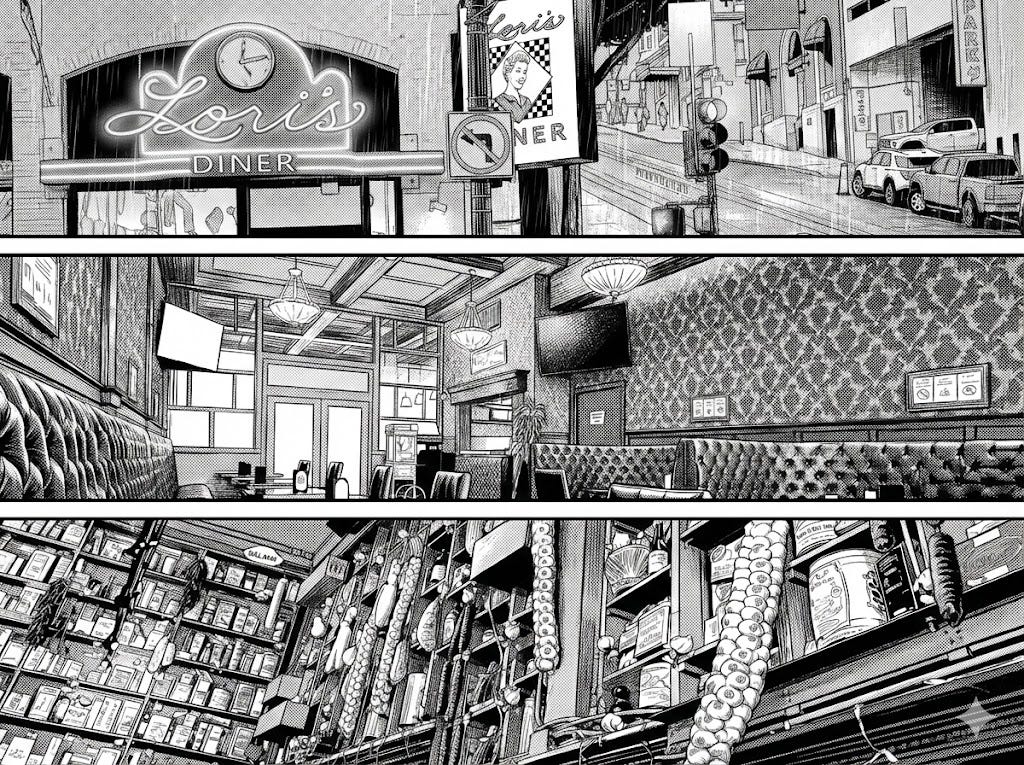
The sun threatened to appear but thought better of it, retreating behind the grey curtain. Then, a pilgrimage to Lori’s Diner.
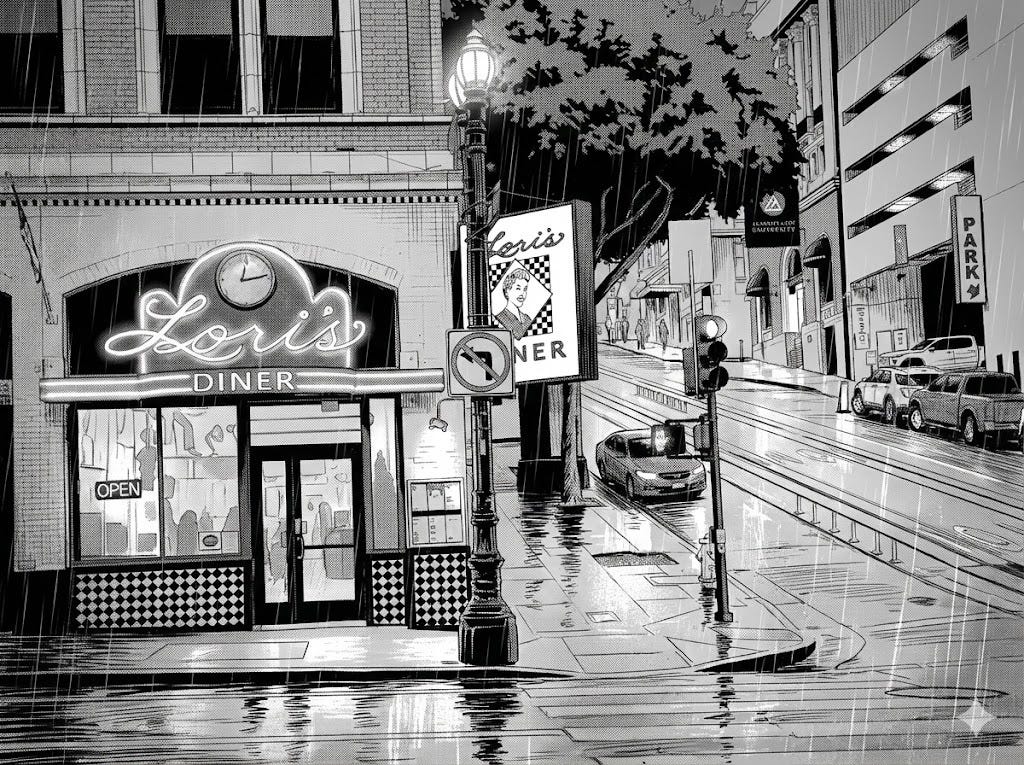
I am a sucker for the aesthetics of American gluttony. Specifically: Soft butter in a star shape. It’s a small, yellow geometric proof that God loves us and wants us to have clogged arteries. It’s details like that—the chrome plating on the counter, the red vinyl stools that squeak when you sit, the star-shaped lipids melting on toast—that anchor you in reality when the simulation feels glitchy. Daniela, sensing my philosophical crisis over butter, simply spread it on her toast and winked. Crisis averted. Reality restored through dairy.
We went to OG Mildred’s birthday party—respect the elders, they survived the analog age. They remember a time before the cloud, before the rain never stopped. They have stories that aren’t stored on servers, memories that don’t need Wi-Fi to access.
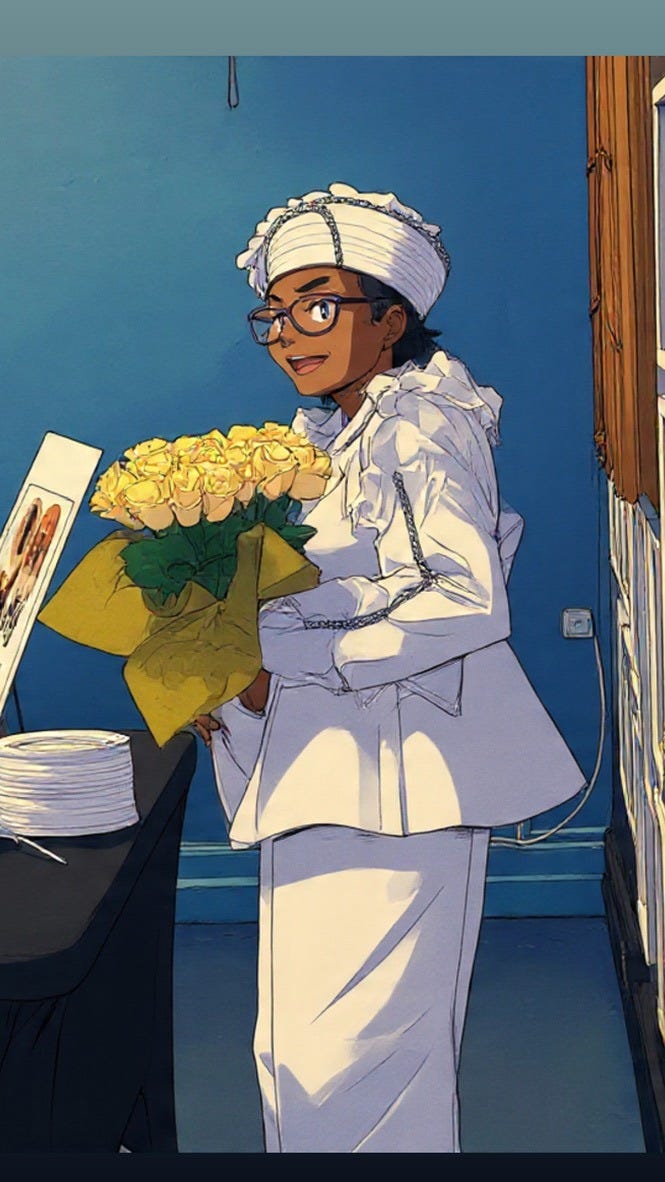
On the way back, the hotel elevator provided the narrative twist. The doors slid open with a soft chime, revealing the scene. There, on the floor, abandoned and tragic: A pair of man panties.
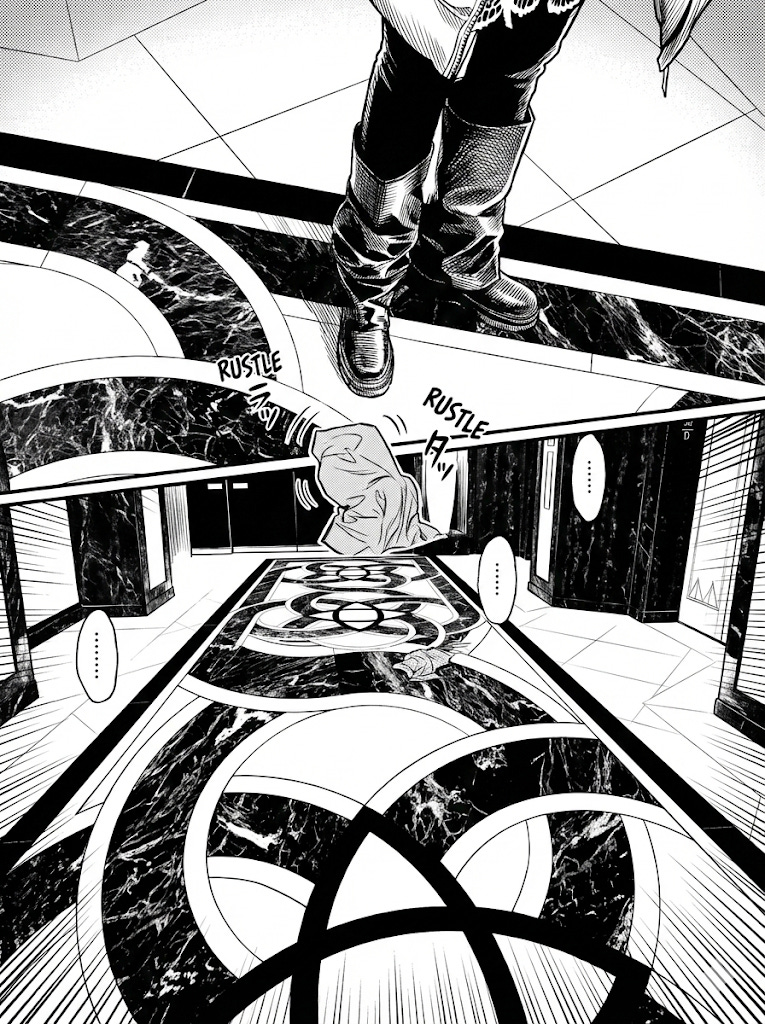
Not laundry. Not luggage. A singular, deliberate artifact. Black lace, lying on the industrial carpet like a crime scene evidence marker. We laughed until the doors opened. Daniela dubbed it “The Rapture of the Lingerie,” inventing a backstory on the spot about a spy who escaped through the ventilation shaft but left a calling card. Maybe it was a signal? A challenge? It was a glitch in the hotel’s matrix, but she turned it into a feature, weaving a story that lasted until we reached our floor.
And outside? It rained. Cold. Wet. Relentless. It was like Kamino, the cloning planet from Star Wars, but with more homeless encampments and fewer clones. The water was everywhere—in the gutters, in the air, in the conversation.
The Rock and The Red Eye
The last day was a military exercise in “Hurry Up and Wait.”
We took a boat to Alcatraz in a monsoon. The Rock was wet, soggy, and smelled of rust and despair. The tour audio whispered ghosts into our ears while the wind tried to push us into the bay. The cells were small, cold, and damp—a stark reminder of analog containment. But humanity persists—the dude signing autographs for a book about being a prisoner there liked you. He liked your choice in cups. A small analog connection in a digital storm. A nod from a man who had seen the inside of a cage to a couple of tourists just visiting one. Daniela charmed him, of course. She has a way of making even former felons feel like they’re the most interesting people in the room, listening to his story with an intensity that made the cold concrete feel a little warmer.
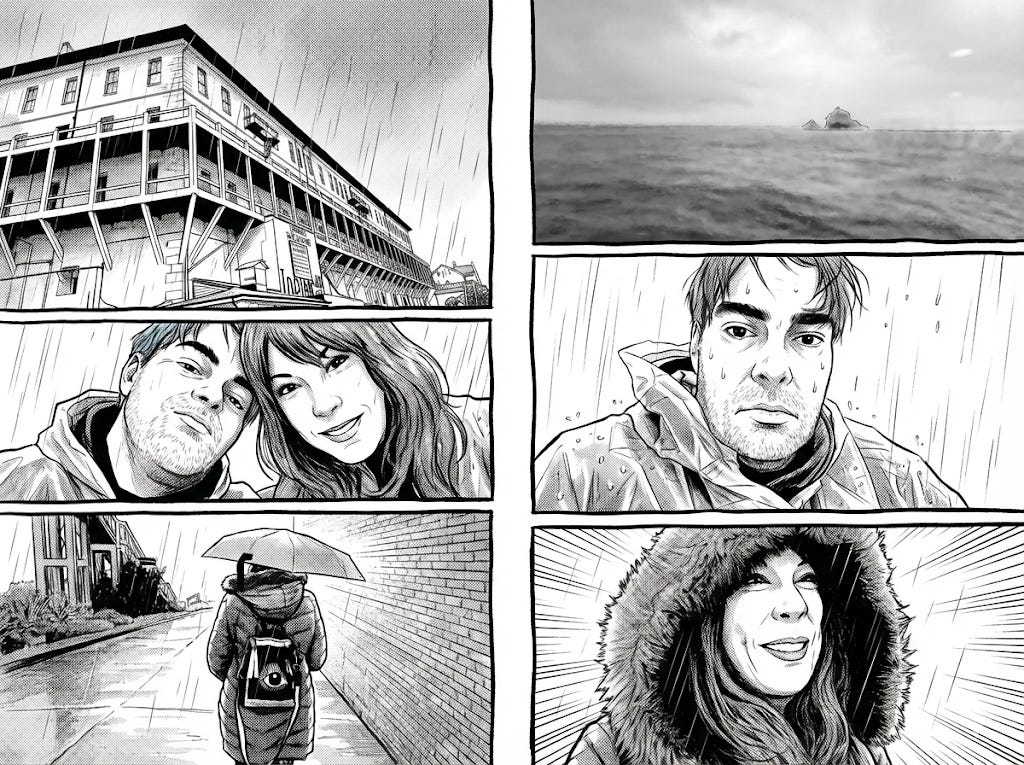
Soaked to the bone, we ran away. We sought refuge at The Stinking Rose.
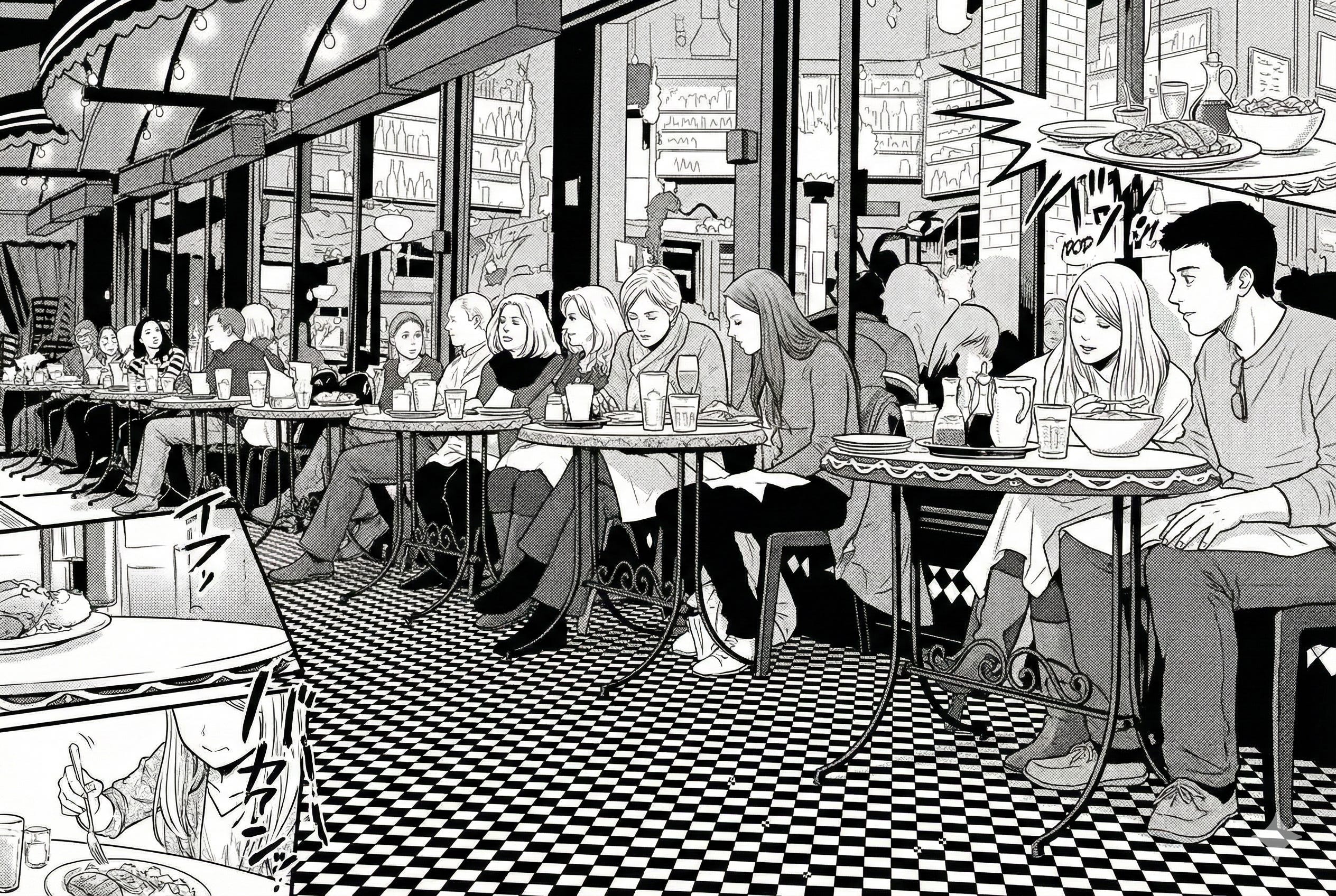
If you haven’t had their gnocchi, you haven’t lived. It’s garlic-loaded carb-loading for the soul. The place smelled like a vampire’s worst nightmare and an Italian grandmother’s dream. We retreated back to the Barbary Coast for hours, hiding from the sky. Daniela declared us “garlic-infused,” which is a superpower in a city full of bloodsuckers and tech-bros.
The finale wasn’t a sequence of events; it was a sensory overload, a montage edited by a manic director on a jagged dopamine comedown.
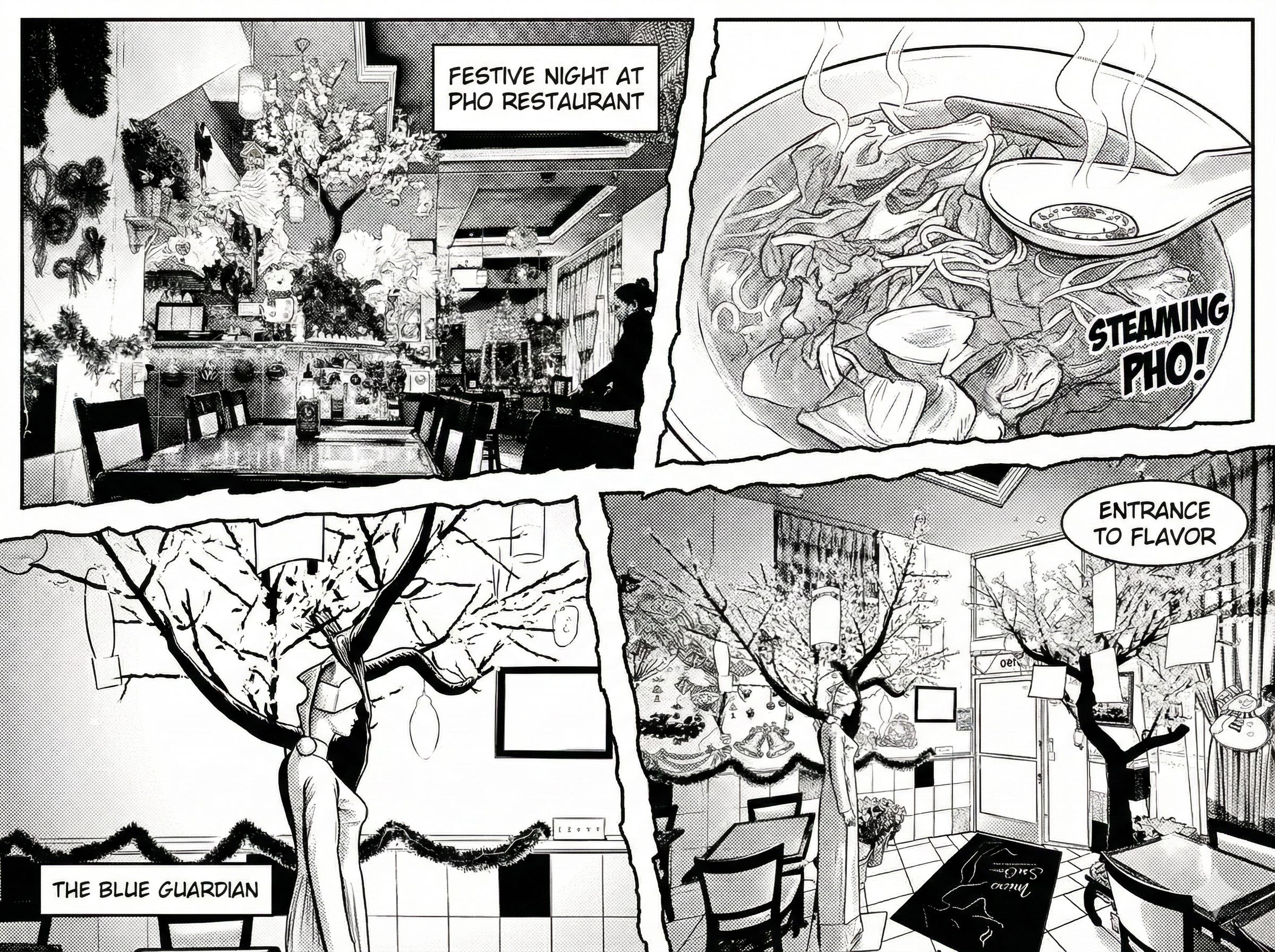
First, the thermal shock of Miss Saigon. We hit the door like crash dummies, escaping the relentless, freezing atmospheric river for a wall of humidity and star anise. The Pho wasn’t just soup; it was a tactical counter-measure against hypothermia. I drowned my face in a bowl the size of a satellite dish, the hot broth battling the cold rain in a thermal war zone inside my own chest. It tasted like cinnamon, beef fat, and survival. Daniela looked across the steam, her eyeliner perfect despite the monsoon, and grinned. “We’re winning,” she said. And we were. We were beating the weather with broth.
Then, the street itself betrayed us. The rain had slicked the pavement into a black mirror, turning the city into a glitch-art installation. Neon signs from dive bars and tech HQs bled into the asphalt—reds, blues, and toxic greens smearing together in a kaleidoscope of oil and light. It was beautiful and nauseating, like walking through the opening credits of a cyberpunk movie that ran out of budget for the third act.
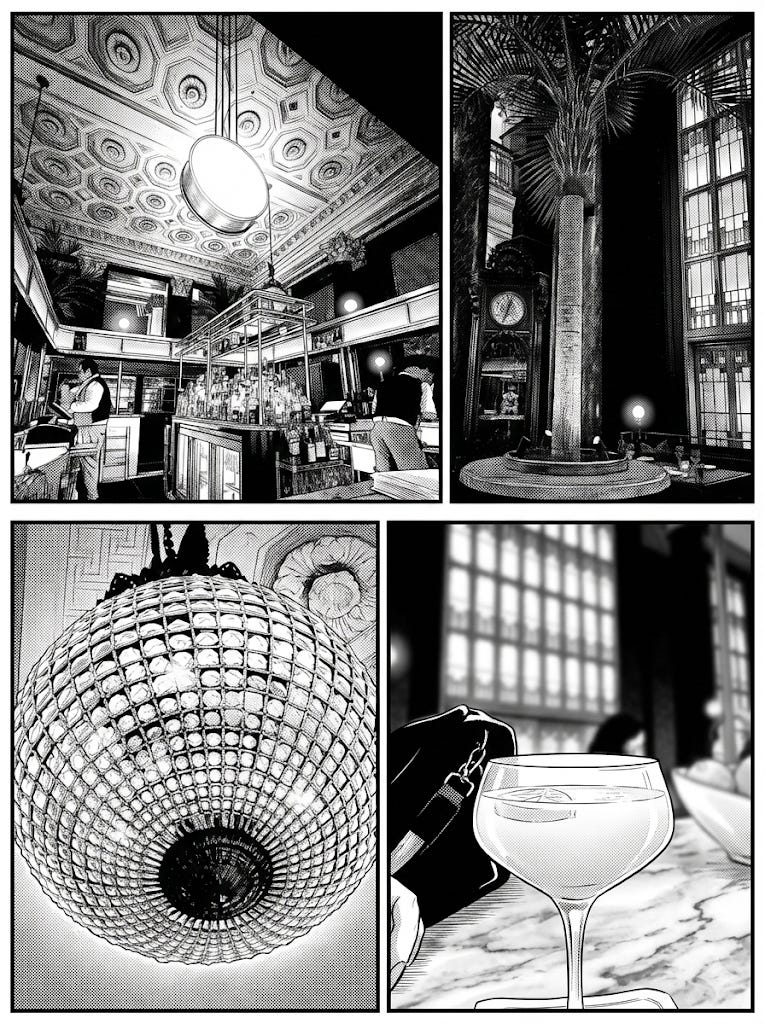
We sought asylum in the lobby of an Westin St Francis, a place that felt preserved in amber while the rest of the city rotted. It was pure noir—velvet shadows deep enough to hide a subplot, brass railings that hadn’t been touched since the 40s. We drank coffee that was blacker than a venture capitalist’s heart, served by a barista who looked through us, his eyes scanning the room for a producer to buy his screenplay about a sentient crypto-wallet. Daniela sank into the velvet chair like a queen in exile, making the faded glamour feel relevant again, commanding the room just by existing in it.
And finally, the coup de grâce. The bar. The best Lemon Drop ever constructed by human hands. It wasn’t a cocktail; it was a hard reset for the frontal lobe. Sour enough to wake the dead, sweet enough to lie to you about the hangover, and strong enough to make you forget the impending doom of the TSA line. The sugar rim was the only crystalline truth left in the city. Daniela clinked her glass against mine, the sound sharp and clear. “To the glitches,” she said.
But the simulation always demands its price. The inevitable extraction. The Red Eye home. It is the death by a thousand cuts—the cramped seat, the recycled air, the crying baby that sounds like a dial-up modem connecting to hell. We were ripped from the dreamstate, processed through security like luggage, and shot back across the continent in a metal tube.
We left San Francisco as we found it: wet, expensive, and beautifully broken. A city of ghosts and tech, drowning in its own atmosphere, waiting for the next update. But as long as Daniela is riding shotgun in the simulation, even the glitches feel like upgrades.
Space’s Substack is a reader-supported publication. To receive new posts and support my work, consider becoming a free or paid subscriber.